


Published: July 21, 2026
by
Marguerite Cotter
You are at the gate, boarding passes in hand, and a thought creeps in: what happens if the alarm goes off while we are away? The house will sit empty for a week, maybe two. If something triggers the system at 3 am, you will be asleep in a different time zone, your phone possibly on flight mode, or buried under a towel on a beach somewhere. It is a fair worry, and it deserves a straight answer.
With PhoneWatch, the response does not depend on you answering the phone. The moment your alarm activates, the signal reaches our 24/7 Dublin Alarm Receiving Centre staffed by trained operators. If they cannot reach you, they contact your nominated keyholders. If the situation warrants it, the Gardaí or emergency services are called. The whole chain runs whether you are in your kitchen or on a sun lounger in Portugal. Here is exactly how it works.
Quick Facts: What Happens If Your Alarm Goes Off While You Are Abroad?"
If your PhoneWatch alarm activates while you are abroad, the alert reaches the 24/7 Dublin Alarm Receiving Centre (ARC) within seconds. A trained operator assesses it and tries to reach you. If you cannot be contacted, your nominated keyholders are called, and the Gardaí or emergency services are dispatched if the situation requires it.
- The ARC operates 24/7/365, so time zones and travel make no difference to response.
- If you are unreachable, your nominated keyholders are contacted next.
- Garda and emergency dispatch does not depend on you personally answering.
- You do not need to be online or roaming for the system to work.
- Average ARC response time is 15 seconds.
Why an Empty House in Summer Is a Different Kind of Risk
According to the CSO, there were 8,469 burglaries in Ireland in 2025, equating to over 23 break-ins every single day (CSO Recorded Crime, Q4 2025). You can explore Ireland's latest burglary statistics for a fuller picture, but the headline number makes one thing clear: this is not a rare event.
Winter remains the traditional peak for burglaries but summer carries its own distinct risk with break-ins linked to homes left unoccupied while owners are on holiday. The pattern makes sense: curtains stay drawn, post builds up, bins sit unemptied, and nobody is coming or going for days at a stretch. An empty house advertises itself.
While most families are only away for a week or two at a time, any period when a property is left unattended can increase the risk of burglary or allow issues such as leaks, power failures, or other incidents to go unnoticed.
The same principles that help protect homes during holidays also apply to properties that are vacant for longer periods. If you own or are considering buying a second home, you can learn more about our holiday home security solutions.
What Actually Happens the Moment Your Alarm Activates

The sequence is fast and it is the same whether you are upstairs asleep or 2,000 kilometres away.
A sensor is triggered: a door contact, a motion detector, a window sensor. The alarm panel sends a signal instantly to the PhoneWatch Alarm Receiving Centre in Dublin. This is not a generic call centre. It is a dedicated, EN 50518-certified facility (PSA licence 00621) that handles up to 670,000 activations a year. The average response time from signal received to operator action is 15 seconds.
The operator assesses the alert. Where cameras or photo verification are installed, they can see what triggered the activation. This is not a slow, manual process: it is trained, structured, and happens around the clock, 365 days a year.
What If They Can't Reach You? The Keyholder Chain Explained
This is the section that answers the question most travellers are really asking. The operator's first step after assessing the alert is to contact the homeowner. But when you are abroad, that call may not connect. You might be on a flight. Your phone might be in a hotel safe. Roaming might not be active. You could simply be asleep in a different time zone.
This is expected, and the system is built for it. A missed call from you does not stall the response.
When the ARC cannot reach you, the operator moves to your nominated keyholders. A keyholder is a trusted person you have listed with PhoneWatch who can be contacted in your place and who ideally has access to your property. Most people nominate a nearby family member, a neighbour, or a close friend: someone local, someone reliable, someone who can physically check the house if needed.
The keyholder chain means there is always a next step. The response keeps moving forward regardless of whether your phone is on or off, whether you have signal, or whether you are mid-flight over the Atlantic. This is the core difference between a siren sounding in an empty house and a monitored alarm with a human response behind it.
One practical point: keyholders need to be current. Before any trip, it is worth confirming that the people on your list are still nearby, still reachable, and still willing.
When are the Gardaí Called?
The ARC operator assesses every activation on its merits. Where the situation warrants it, for example a verified activation or corroborating evidence from camera verification, the operator coordinates a response from the Gardaí or emergency services directly. This happens independently of whether the homeowner or keyholder has been reached.
It is important to be clear about what PhoneWatch can and cannot do here. The ARC coordinates and requests Garda dispatch: it does not control Garda availability or response times. What it does ensure is that the right information reaches the right people as quickly as possible, with verification evidence where available. That verification step is valuable for everyone involved. It helps ensure genuine incidents get a fast, appropriate response and reduces false callouts that waste Garda resources.
Staying Connected From Anywhere: The PhoneWatch App
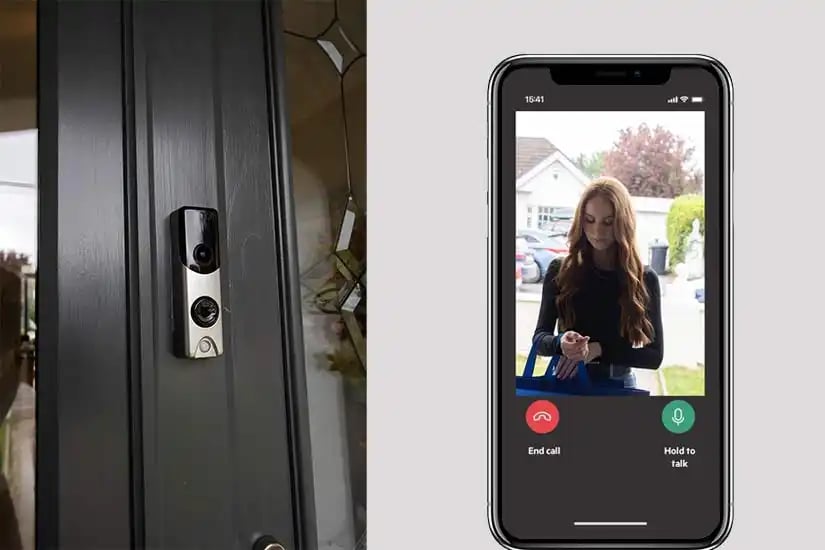
The PhoneWatch app gives you a window into your home from wherever you are. You can check system status, arm or disarm your alarm, and view camera clips or live feeds where cameras are installed. It works over wifi, so you can use hotel or cafe networks without worrying about roaming charges.
For many people on holiday, the app provides a simple, reassuring check-in: a glance at your phone over morning coffee to confirm everything is as it should be. But it's important to remember that effective security doesn't depend on you constantly checking notifications. Even if you're out of signal range, on a flight, or choose to disconnect completely, the ARC remains on watch, responding to alarms and contacting keyholders when required. The system is designed to work independently, so your home remains protected while you enjoy your holiday.
How to Prepare Your Home (and Your Alarm) Before You Travel
A few minutes of preparation before you leave can make a real difference to how smoothly everything runs while you are away. Start with the alarm-specific steps:
- Confirm your keyholders are current and reachable. Check that the people on your list are still local, still have access, and know they are nominated.
- Check the contact numbers PhoneWatch holds for you. Make sure your mobile number is correct and consider adding a secondary number if you will be hard to reach.
- Test the PhoneWatch app before you fly. Log in, check your system status, and make sure notifications are working.
- Arm the system fully when you leave. Set the full alarm, not just a partial zone.
- Call PhoneWatch to review your details if you have not done so in a while, especially before a longer trip.
Beyond the alarm, the sensible basics still apply:
- Pause your post or ask a neighbour to collect it daily.
- Use light timers to mimic occupancy at different times of day.
- Do not broadcast your travel plans on social media until you are home.
- Ask a trusted neighbour to park in your drive occasionally or clear any flyers from the door.
- Make sure bins are not left out for the duration of your trip.
Peace of Mind Is the Point of a Monitored Alarm

The value of professional monitoring is not in the sensors or the siren. It is in being able to close the front door, drive to the airport, and genuinely switch off, knowing that a trained team in Dublin is watching your home around the clock and that a response chain is in place that does not depend on you.
PhoneWatch has been protecting Irish homes for over 33 years. More than 120,000 households trust the service, and the company holds a 4.9 out of 5 rating on Trustpilot. PhoneWatch homes are four times less likely to be burgled than the national average.*
The broader question of whether a monitored alarm is worth it is one many homeowners consider. But when you're away on holiday, the benefit becomes much easier to quantify: your home remains protected even when you can't respond yourself.
Heading abroad soon? Make sure your home is protected by a monitoring team that responds even when you cannot. Get a personalised PhoneWatch quote and travel knowing there is a plan in place for your empty house.
Frequently Asked Questions
What happens if I can't be contacted when my alarm goes off abroad?
If PhoneWatch's Alarm Receiving Centre cannot reach you, the operator moves to your nominated keyholders: the trusted contacts you have listed who can check the property or hold a key. If the situation warrants it, the Gardaí or emergency services are dispatched. The response does not stop because you missed a call.
Will the Gardaí be called if I don't answer the phone?
Garda and emergency-services dispatch does not depend on you answering. The ARC operator assesses the alert, using camera or photo verification where installed, and coordinates the appropriate response directly when the situation requires it. PhoneWatch requests and coordinates dispatch and cannot guarantee Garda timing.
What is a keyholder and who should I nominate?
A keyholder is a trusted person you nominate to be contacted if you cannot be reached, and who can access or check your property. Most people nominate a nearby family member, neighbour, or friend. Choose someone local and reliable, and keep their details up to date, especially before you travel.
Does my alarm still work if I don't have roaming or wifi abroad?
Yes. Your alarm communicates with the ARC over its own connection, independent of your phone. You do not need roaming or wifi for monitoring to work. The app is an optional extra for checking in; the monitoring runs regardless.
Do time zones affect how quickly my alarm is handled?
No. The Dublin ARC operates 24 hours a day, 365 days a year. Whether it is 3 am in Dublin or midday where you are holidaying, the response is the same.
What should I do with my alarm before going on holiday?
Confirm your keyholders are current and reachable, check the contact numbers PhoneWatch holds for you, test the app before you fly, and arm the system fully when you leave. A quick call to PhoneWatch to review your details is worth doing before a longer trip.
Can I check on my home while I'm abroad?
Yes. The PhoneWatch app lets you view your system status, arm or disarm, and see camera clips or live feeds where cameras are installed, over wifi so roaming charges need not apply. It is reassurance on top of the monitoring, not a replacement for it.
Is a monitored alarm better than a self-monitored one when I'm away?
When you are abroad and potentially unreachable, a self-monitored system relies on you seeing and acting on a notification. A monitored house alarm puts a trained team and a keyholder chain between the alert and the outcome, so a response happens even if you never see your phone.