

Published: October 05, 2026
by
Marguerite Cotter
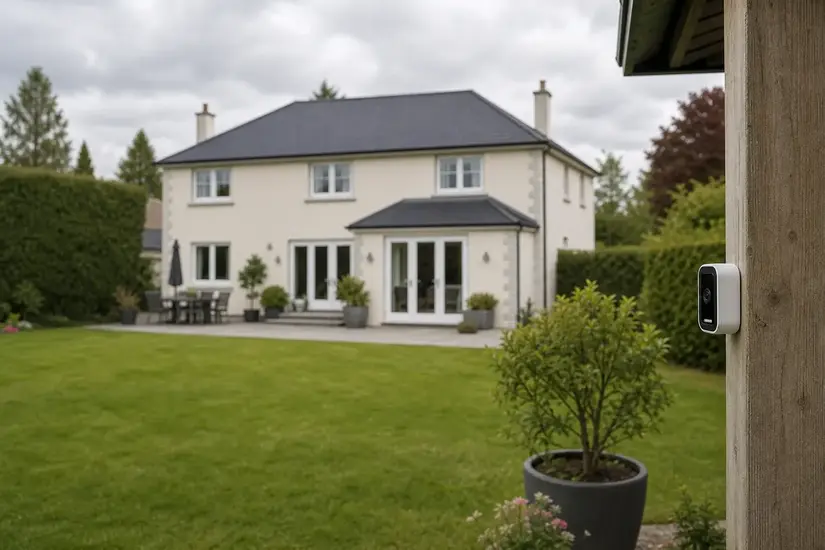
You have the perfect spot in mind for a security camera. Maybe it is the side passage, the back garden, a detached shed or the driveway. The only problem is that there is no power socket nearby, and running a cable feels like more hassle than it is worth.
That is why battery security cameras have become so popular. But are battery security cameras any good? The short answer is yes. In this guide, we look at how battery-powered cameras perform in everyday Irish homes and introduce the PhoneWatch Battery Camera, which combines wire-free flexibility with a professionally monitored PhoneWatch system.
Quick Answer: Are Battery Security Cameras Any Good?
Yes. A good battery security camera records clear footage day and night and can go where wiring cannot reach.
Key Takeaways:
-
- Battery cameras need no power socket or cable run, so they suit spots wiring cannot easily reach.
- Battery life varies with how much activity the camera records; smart detection helps conserve it.
- A strong Wi-Fi signal at the mounting point matters
- Privacy masks help keep public areas and neighbouring property out of shot.
Are battery security cameras any good? The honest answer
Battery security cameras are a practical solution for many homes. Their biggest advantage is flexibility. Because there is no need for a power cable, they can be installed in places where wiring would be difficult, disruptive or visually intrusive.
For Irish homeowners, that can mean coverage of a side entrance, garage, shed, driveway or upstairs landing without running cables through walls or ceilings. In homes that have recently been insulated or renovated, avoiding cable runs can be especially appealing.
Unlike a wired camera, a battery-powered model needs periodic recharging. Battery life also varies depending on how much activity the camera records, the settings used and environmental conditions. A battery camera is also more dependent on having a reliable Wi-Fi connection wherever it is mounted.
Another difference is that battery models generally focus on recording events rather than continuous footage. This helps preserve battery life while still capturing important activity.
For many homeowners, these compromises are well worth the convenience. The more important question is often not whether the camera can record an event, but what happens next. That is where a monitored solution differs from many standalone cameras.
If a battery camera is not the right fit for your home, you can compare the wider range of PhoneWatch security cameras.
Meet the PhoneWatch Battery Camera
The PhoneWatch Battery Camera is built to deliver clear, detailed footage wherever you place it, without a single cable run through your walls. It captures 4MP HDR video at up to 2688 x 1520 resolution, which means sharp detail whether the sun is behind the subject or the scene is backlit by a porch light. A 140-degree horizontal field of view covers a wide area with fewer blind spots, so a single camera can take in an entire side passage or driveway.
After dark, the camera switches between infrared night vision with a range of up to 5 metres and a built-in spotlight that delivers colour footage making it far easier to identify clothing, vehicles or faces compared to the grey-scale images from infrared alone.
On the detection side, the camera uses person, vehicle and animal analytics. Rather than triggering a clip every time a branch moves or a cat crosses the garden, it distinguishes between types of motion. That cuts unnecessary alerts and helps preserve battery life at the same time. Two-way audio lets you speak to visitors or delivery drivers directly through the app.
Where does a battery security camera work best?
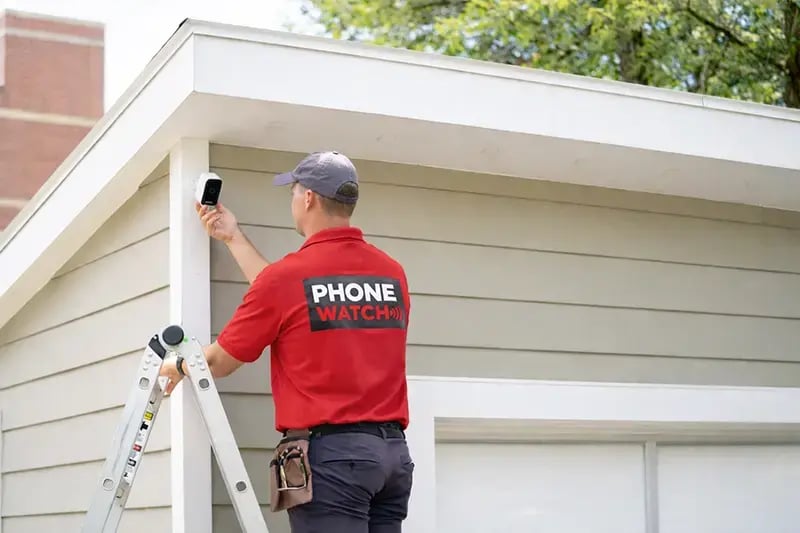
The biggest strength of a battery camera is simple: it can be placed where cables would be awkward.
Common locations include:
- Side passages
- Back gardens
- Driveways
- Garages
- Detached sheds
- Front porches
- Hallways and landings
This flexibility is particularly relevant in modern Irish homes that have benefited from energy-efficiency upgrades.
During installation, a PhoneWatch Security Advisor assesses the most suitable location for the camera. This includes checking Wi-Fi strength at the mounting point, selecting a position that is difficult to access from ground level, and ensuring the camera's field of view focuses on your property rather than neighbouring homes or public areas.
The PhoneWatch Battery Camera is designed for indoor and outdoor use and operates in temperatures ranging from -20°C to 45°C, according to product specifications, making it suitable for Irish weather conditions year-round.
Monitored vs app-only: what happens after an alert?
This is where many homeowners begin to see the difference between a standalone battery camera and a professionally monitored security system.
With an app-only camera, alerts arrive on your phone. If you are at work, driving, on holiday or asleep, the responsibility for checking and responding remains with you.
For some households that may be enough. For others, the concern is whether they will notice the alert at the moment it matters.
Within a PhoneWatch system, monitoring adds another layer of support. With customer consent, clips captured during alarm events can help the PhoneWatch Alarm Receiving Centre verify what is happening. The ARC then follows established procedures, contacting the homeowner, keyholders and, where appropriate, the emergency services.
You can learn more about 24/7 alarm monitoring and how professional monitoring works. If you are weighing up broader camera options, our guide on how to choose the right security camera covers the wider monitored versus self-monitored decision.
For homeowners looking for both convenience and support, this combination of wire-free installation and professional monitoring is what sets the PhoneWatch Battery Camera apart.
Privacy, footage and the PhoneWatch Video App
Privacy is built into the camera rather than being an afterthought. The camera includes privacy masks, allowing selected parts of the image to be blocked from recording. This can help exclude areas such as neighbouring gardens, shared access routes or sections of a public footpath.
There is also an option to record only when the alarm is armed, giving homeowners greater control over when recording takes place.
As a general best practice, homeowners should position cameras to focus on their own property and avoid recording beyond its boundaries wherever possible.
How long do battery security cameras last?
The PhoneWatch Battery Camera uses a 6,450 mAh rechargeable battery, and it charges via USB-C. You can charge it while it is still mounted on the wall or remove the battery and charge it indoors, whichever is more convenient.
Battery life depends on how much activity the camera records, your detection settings and conditions such as cold weather. Person, vehicle and animal detection plays a role here: by filtering out irrelevant motion, the camera avoids recording clips it does not need to, which helps the battery last longer between charges. The camera supports both 2.4 GHz and 5 GHz Wi-Fi networks and requires an upload speed of at least 2 Mbps for reliable operation.
Discover the New PhoneWatch Battery Camera
Clear day and night coverage wherever you need it, with no cable runs through your walls. Add it to a PhoneWatch system backed by a 24/7 Alarm Receiving Centre.