

Published: September 16, 2026
by
Marguerite Cotter
Retail theft is a growing concern for businesses across Ireland. In fact, theft from shops has risen by nearly 47% over the past decade, according to Central Statistics Office (CSO) recorded crime data. From shoplifting during trading hours to after-hours break-ins, retail crime can have a major impact on revenue, stock and staff safety.
In this guide, we'll explore the key security risks facing Irish retailers and how a combination of monitored alarms, CCTV and panic buttons can help deter crime, reduce losses and protect your business.
Quick Answer: How can I protect my shop from theft in Ireland?
Irish shops are best protected by a layered approach that combines a professionally monitored intruder alarm, monitored CCTV with verified alerts, controlled access to stockrooms and staff areas, and panic buttons for staff, so that a break-in or incident triggers a real response rather than just a recording.
- Theft from shops in Ireland has risen roughly 47% over the past decade, according to CSO data.
- Retail crime is estimated to cost Irish businesses around EUR 1.62 billion a year, per the Irish SME Association (ISME).
- Monitored systems trigger a verified human response; unmonitored cameras only record.
- PhoneWatch's certified Alarm Receiving Centre (ARC) responds to a verified alarm in an average of 15 seconds.
- Panic and duress buttons give staff a direct line to a monitoring centre during an incident.
The true scale of retail crime in Ireland
Retail crime in Ireland is not a perception problem. It is a statistical reality. In the year to Q1 2026, the CSO recorded around 33,913 thefts from shops. That is more than 90 incidents every single day, and it accounts for roughly six in ten of all recorded theft offences in the country.
The financial toll is significant. ISME estimates that retail crime costs Irish businesses around EUR 1.62 billion a year. For smaller operators, the impact is even more concentrated. RGDATA, the representative body for independent grocers, estimates that theft can cost a medium-sized grocery shop up to EUR 100,000 a year. On margins that are already tight, those losses are not absorbed easily. They come directly off the bottom line.
These are not abstract figures. They represent stock that is never paid for, repairs to damaged premises, insurance excess payments, and the hours spent dealing with the aftermath instead of running the business.
The three threats every Irish shop faces
Understanding where the risk sits is the first step toward addressing it. For most Irish retailers, the exposure breaks down into three distinct categories.
Shoplifting and organised retail crime during opening hours
This ranges from opportunistic theft to coordinated activity by organised groups who target specific products for resale. It happens in plain sight, during your busiest trading periods, and it is increasingly brazen. The sheer volume of incidents, more than 90 a day nationally, tells you this is not a problem you can watch your way out of.
After-hours burglary and break-ins
When the shop is closed and the premises are empty, a sounding alarm on its own may do very little. If nobody is listening, nobody responds. Out-of-hours break-ins can result in significant stock loss, damage to shutters and entry points, and disruption that keeps you closed the following day.
Abuse, threats and violence directed at staff
This is the threat that keeps many shop owners up at night. Your staff are the ones on the front line when a situation escalates, and the data shows how common that has become. A Retail Ireland survey conducted with 3Gem between December 2025 and January 2026 found that up to 70% of retail workers have experienced abusive language or behaviour, with around one in three of those affected experiencing it at least weekly. Staff safety is not a secondary concern. It is central to how you run your business.
Why Monitoring Matters: More Than Just an Alarm Sounding
Most shops have some form of alarm. The question is what happens when it goes off. A standard, unmonitored alarm sounds a siren. If the premises are empty and nobody is within earshot, or if passers-by simply ignore it, the alarm achieves very little beyond noise.
A professionally monitored alarm works differently. When the system is triggered, the alert goes directly to a monitoring centre staffed by trained operators around the clock. The operator assesses the situation using verified information from the system. If the alarm is confirmed as genuine, keyholders are contacted and, if required, the Gardaí or emergency services are dispatched.
This is the core distinction: record versus respond. A siren records the fact that something happened. A monitored business alarm system ensures that someone acts on it.
PhoneWatch operates a certified 24/7 Alarm Receiving Centre in Dublin, certified to the EN 50518 standard. The ARC responds to a verified alarm in an average of 15 seconds. That is the time from alert received to a trained operator assessing and acting on it. With over 33 years operating in Ireland, more than 120,000 monitored customers, PSA licence 00621, and a 4.9 out of 5 rating on Trustpilot, the infrastructure behind that response is well established.
To understand more about the verification and escalation process, see how alarm monitoring works.
Monitored Security Cameras vs Cameras That Only Record
Cameras are often the first thing a shop owner invests in, and for good reason. They provide a visible deterrent and valuable evidence after an incident. But there is a gap between having footage and being able to act on what it shows.
Standard, unmonitored CCTV records continuously or on motion detection. You, or the Gardaí, review it after the fact. It tells you what happened. It does not change what happens.
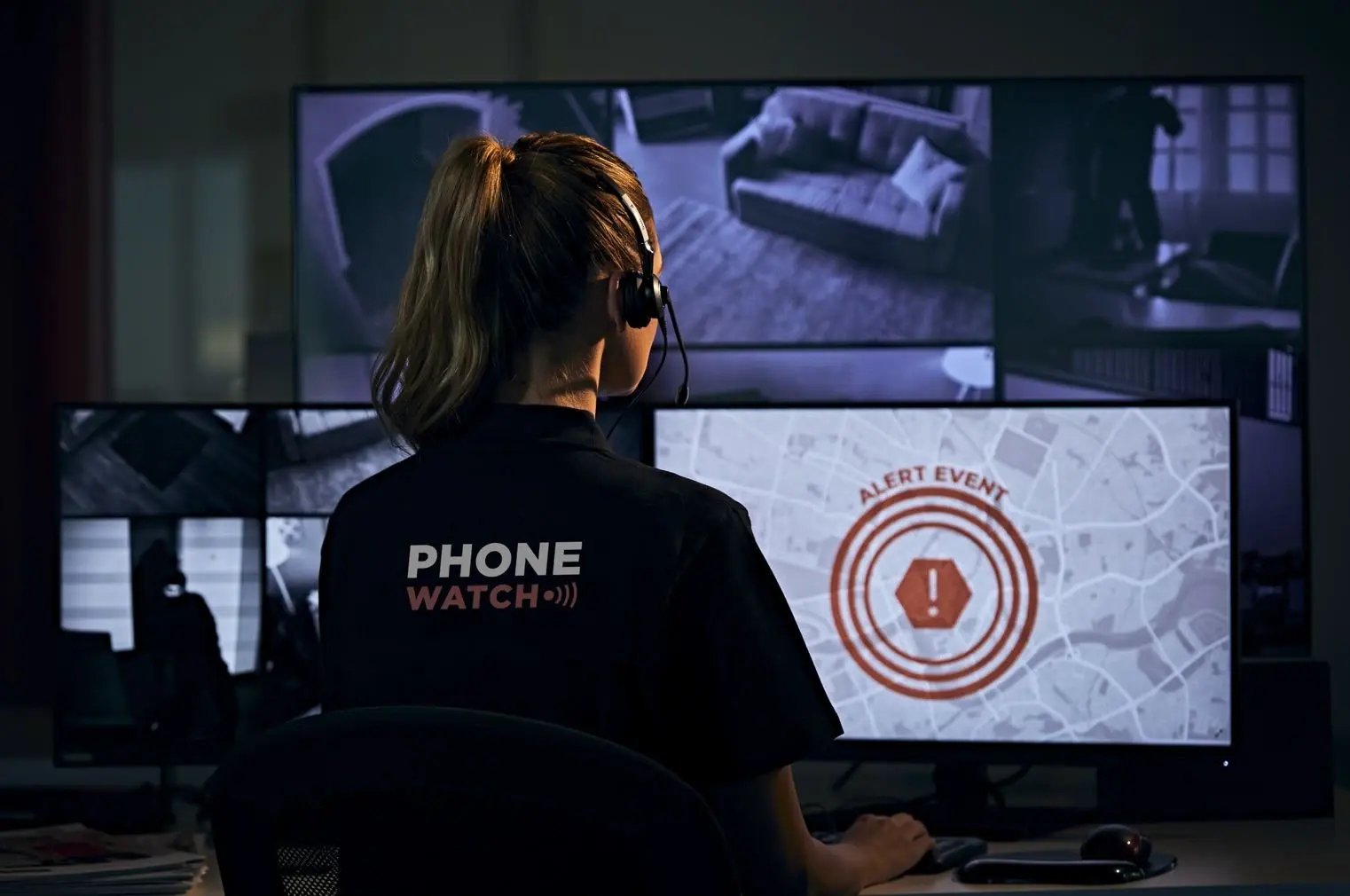
Monitored security cameras add an extra layer of protection.. When an alarm is triggered, images from the cameras are sent to the monitoring centre. Operators can then verify the nature of the incident and escalate accordingly. The footage is not being watched passively all day. Images are only reviewed on activation, which addresses legitimate privacy concerns for both staff and customers.
Cameras are valuable, but they deliver the most when they are connected to a monitoring layer that can turn an image into an intervention, not just an evidence file.
Controlling access and protecting the stockroom
Not all loss comes from the shop floor, and not all of it is dramatic. Opportunistic theft from poorly secured stockrooms, back-of-house areas, and delivery points accounts for a meaningful share of retail losses in many businesses.
Some straightforward measures that make a real difference:
- Staff-only zones clearly marked and physically separated from customer areas.
- Controlled keys or fobs for stockrooms, offices and external doors, so access is limited and traceable.
- Clear sightlines on the shop floor, avoiding tall displays near exits or blind spots near high-value stock.
- Delivery protocols that ensure goods are checked in and secured promptly rather than left on a loading bay.
Access control complements your monitored alarm and CCTV. It reduces the opportunity for both external and internal loss, which means fewer incidents for your monitoring system to deal with in the first place.
Protecting your staff: panic and duress buttons
A 2025 survey by the Mandate trade union members found that roughly two-thirds had suffered verbal abuse, over a quarter had received threats to their physical safety, and more than 11% had experienced assault.
These are the people behind the counter, stacking shelves, and locking up at night. As an employer, you have a duty of care. As a business owner, you also know that staff who feel unsafe are harder to retain.
Panic buttons for staff provide a discreet, direct line to a monitoring centre during a threatening situation. A staff member can activate the button without drawing attention to it. The alert goes straight to the ARC, where operators assess the situation and escalate as needed, contacting keyholders, the Gardaí, or emergency services if required.
This is not about replacing good training or de-escalation skills. It is about giving your team a safety net when those approaches are not enough, and giving you confidence that someone is watching out for them even when you are not on site.
Combining Security Measures for Better Protection
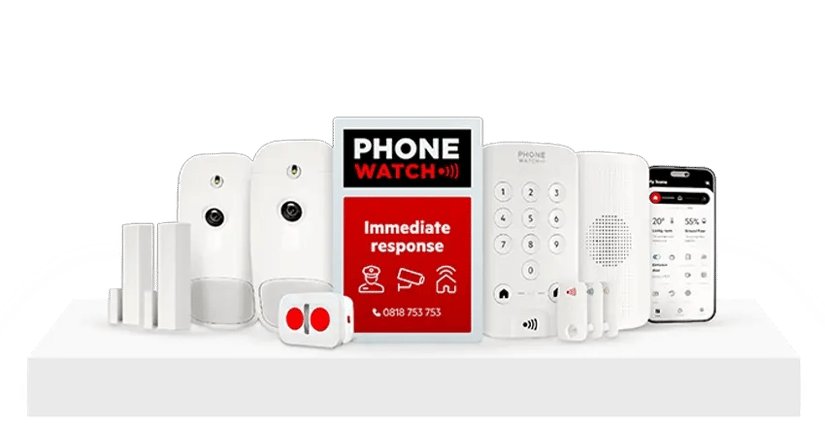
No single product solves retail crime. The right combination depends on the size, layout and risk profile of your premises. A small boutique has different entry points, layouts and staffing patterns to a convenience store or larger retail premises. That is why a security plan should be tailored to your specific situation.
PhoneWatch designs monitored security systems for Irish retail premises, backed by a certified 24/7 Alarm Receiving Centre and more than three decades of experience protecting businesses across the country. Whether you are upgrading from a basic setup or starting from scratch, the starting point is a conversation about your shop, your entry points and your staff.
Secure your premises with monitored protection.