



%20copy.webp?width=825&height=550&name=elderly%20person%20at%20night%20(900%20x%20300%20px)%20copy.webp)
Published: May 07, 2026
by
Marguerite Cotter
When your parent lives alone, especially in a rural or isolated home, the distance between you becomes more than just miles. It's the unanswered phone call that sends your heart racing. The memory of a neighbour mentioning a recent break-in. The quiet worry that sits with you at 2am wondering if everything is okay. It doesn’t have to be this way.
Searching for the best alarm system for elderly parents is a natural and responsible step. This guide explains what features genuinely matter for older adults, why professional monitoring changes outcomes in emergencies, and how to navigate the conversation when your parent insists, they're "fine." The right system should be simple enough that your parent will actually use it and reliable enough that someone always responds when you can't be there.
Quick Answer: Best Alarm System for Elderly Parents
The best alarm system for elderly parents combines professional monitoring, simple operation, and fast emergency response. Rather than complex smart home setups, older adults need systems designed around their reality: one-touch panic buttons, 24/7 trained responders, and professional installation that removes any technical barriers.
Key features to prioritise:
- Panic button or keytag for instant alerts without codes or apps
- 24/7 professional monitoring ensuring response even when your parent can’t reach a phone
- Professional installation so nothing requires DIY configuration
- Fast response times - PhoneWatch maintains a 15-second average alarm response time through their Alarm Receiving Centre
Professional monitoring is the critical differentiator. If a fall happens at 3am and your parent can’t call for help, a trained team receives the alert immediately, contacts keyholders (selected family members or friends) and escalates to emergency services. This happens whether you're awake, asleep, or miles away.
PhoneWatch protects over 120,000 Irish homes with this approach professional security advisors install everything and demonstrate the system before leaving, ensuring your parent feels confident from day one. An alarm system for an elderly person living alone is even more important.
Worried about your parents' home security? Get a Free Quote from PhoneWatch →

Why Choosing the Right Alarm System for Elderly Parents Is Different
This isn't a typical home security purchase. The person researching, you aren’t the person who'll use the system daily. Your parent may be resistant to the idea, fiercely independent, or dismissive of any suggestion they need extra support.
These dynamics change everything about what matters:
- Simplicity trumps sophistication. Advanced motion zones and app integrations mean nothing if your parent finds the system confusing and stops using it.
- Emergency response must work passively. If your parent falls and can’t operate the alarm or reach a phone, the system needs to still alert for help. Home panic alarms for the elderly are a key component of a home alarm.
- Professional installation removes friction. A DIY kit that requires Wi-Fi configuration and app pairing creates barriers that often mean the system never gets properly set up.
- Rural isolation raises the stakes. When the nearest Garda station is 30 minutes away and neighbours aren't within earshot, the speed and reliability of emergency response become even more critical.
Understanding these differences helps you evaluate options through the right lens not what looks impressive on paper, but what will actually protect your parent in a real emergency.
Key Features to Look for in an Alarm System for Elderly Parents
Panic Button or Keytag
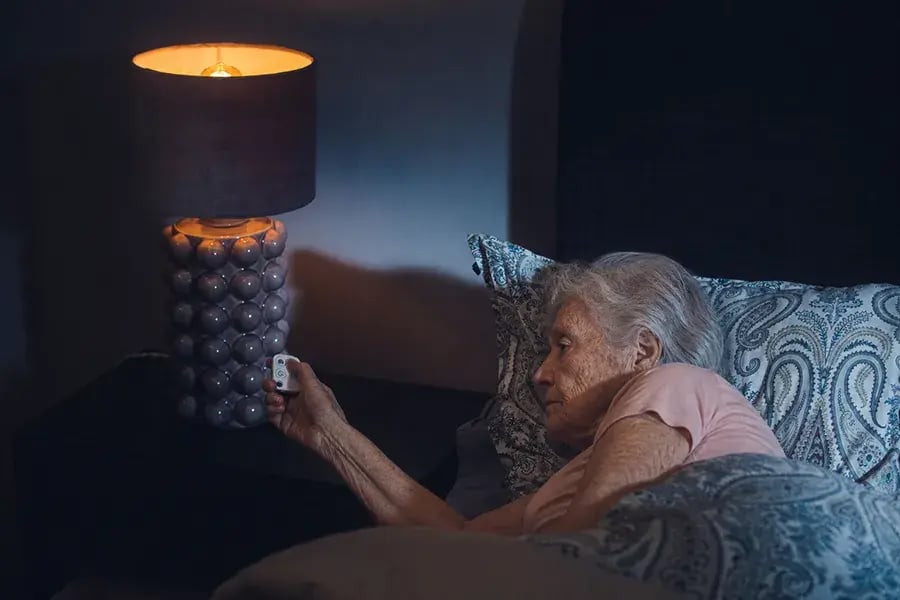
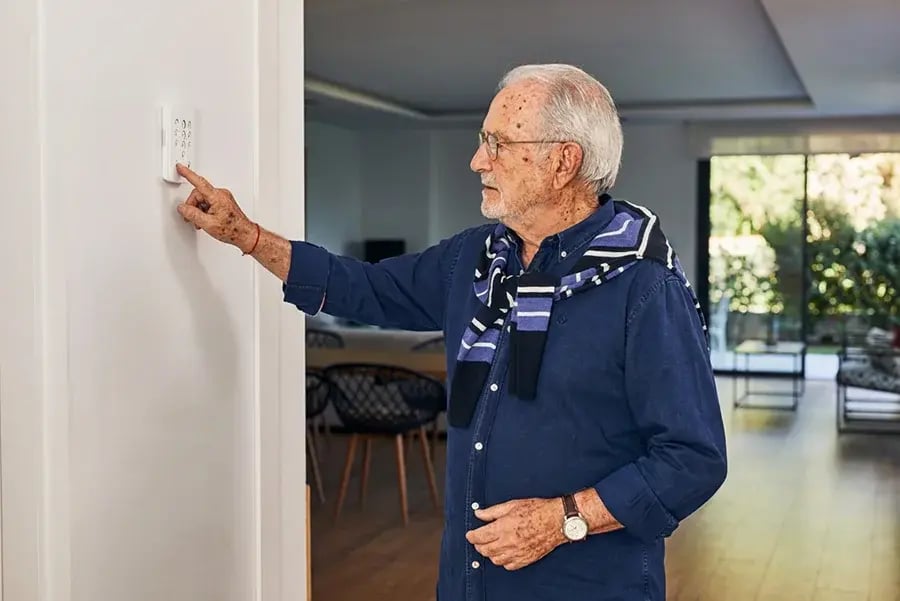
A panic button and simple keytag is often the most valuable component for older adults. One press of a panic button via a PhoneWatch remote control triggers an alert no codes to remember, no app to navigate, no phone to find. For parents with fall risk or health concerns, this single feature can be lifesaving. The PhoneWatch keypad also has an SOS functionality that connects immediately to our Alarm Receiving Centre team will be respond to all activations. Keytags are used to arm and disarm the alarm without having to enter an alarm code, you simply press them to access the alarm keypad to arm the alarm and be protected 24/7.
The best panic alarms for elderly users are designed to use daily and have simple activation, even with limited dexterity. See below how the PhoneWatch panic alarm works:
24/7 Professional Monitoring
When an alarm triggers, what happens next? With professional monitoring, trained staff at an Alarm Receiving Centre respond immediately, verifying the alert, contacting your nominated keyholders, and escalating to emergency services when needed.
This happens around the clock, every day of the year. Your parent doesn't need to make a call or explain the situation. The response is automatic and fast.
Professional Installation
A PhoneWatch security advisor handles complete installation, positioning sensors appropriately for your parent's home layout and demonstrating exactly how everything works before leaving. There's no instruction manual to decipher, no Wi-Fi passwords to enter, no troubleshooting required.
This matters enormously for older adults who may feel overwhelmed by technology. When a professional sets everything up and walks them through it in person, confidence follows.
Simple Daily Operation
The daily routine should require minimal interaction. Arm the system when leaving, disarm when returning, ideally with a keytag rather than a keypad code. No smartphone required for basic operation.
The less your parent needs to think about the alarm, the more consistent they'll use it.
Fast Emergency Response
Response time determines outcomes. PhoneWatch's Alarm Receiving Centre maintains a 15-second average response time with trained professionals assessing the situation and taking action while precious minutes might otherwise be lost.
How Professional Alarm Monitoring Makes the Difference for Elderly Parents
The gap between a basic alarm and a monitored system becomes starkest in the scenarios families fear most. An alarm system for elderly parents in Ireland is convenient and gives you complete peace of mind when it’s monitored.
Unmonitored alarm: A siren sounds. Perhaps a neighbour hears it, perhaps not. Your parent must silence it or call for help themselves. If they've fallen and cannot move, the siren eventually stops and nothing else happens.
Self-monitored app alert: Your phone buzzes with a notification. If you're asleep, in a meeting, or driving, you miss it. Even if you see it immediately, you're now trying to reach your parent by phone while panicking—and if they don't answer, you're left guessing whether to call emergency services. This can be critical in any emergency incident, especially if the smoke alarm goes off and urgent help is essential.
Professionally monitored alarm: Within seconds, trained staff receive the alert. They attempt to make voice contact through the alarm panel. They call your parents’ phone. They contact you and other keyholders. If nobody responds or the situation is clearly an emergency, they dispatch Gardaí or ambulance services directly.
This sequence happens whether the trigger is a panic button press, a smoke detector, or an intruder sensor. It happens at 3pm and 3am. It happens when you're nearby and when you're abroad.
For elderly parents, particularly those living alone, this is the feature that closes the gap between something happening and help arriving.
What If My Parent Doesn't Want an Alarm System?
Resistance is common and understandable. Many older adults feel an alarm system implies they can no longer look after themselves. Some worry about false alarms causing embarrassment. Others simply don't want to feel like a burden or acknowledge that their circumstances have changed. A monitored alarm for elderly living alone is critical in terms of 24/7 burglary, smoke and emergency scenarios so ensuring they support getting an alarm is important and that they know the benefits.
Pushing harder rarely works. Instead, consider reframing the conversation:
Position it as independence, not dependency. An alarm system is precisely what allows your parent to continue living at home safely. It's not a sign of decline—it's a tool that supports the life they want to maintain.
Involve them in the decision. Let your parent choose the installation time, ask questions of the engineer, and feel ownership over the system rather than having it imposed on them.
Emphasise simplicity. A keytag they carry. Nothing complicated. No apps to learn, no codes to memorise. The PhoneWatch installation process is designed to make everything feel manageable.
Ask the "what if" question gently. What happens if something goes wrong when you're not nearby? Having a clear answer to that question often matters more than any feature list.
The goal isn't to win an argument, it's to help your parent feel that accepting this support is a reasonable, dignified choice.

Alarm Systems for Elderly Parents in Rural Ireland
A monitored home alarm for rural Ireland becomes even more essential for your parents.
Emergency services may take significantly longer to arrive in isolated areas. Neighbours are often further away and less likely to notice a problem quickly, no one walking past to see an open door or hear a call for help. Mobile phone signal can be unreliable, making a smartphone-dependent system risky.
A monitored home alarm for rural Ireland addresses these realities directly. The alarm connects through a dedicated communication path to the Alarm Receiving Centre, independent of your parents’ mobile signal. Response happens within seconds regardless of location, and the monitoring team coordinates with emergency services who understand the address and situation before they dispatch.
When isolation increases vulnerability, professional monitoring provides a consistent safety net that distance otherwise removes. A panic button for elderly in Ireland is a vital part of a monitored alarm system and gives them control over their home as they can also set their alarm with the alarm remote control and feel safer.
How to Choose the Right PhoneWatch Package for Your Parent
Most elderly parents living alone are well served by a professionally monitored starter package that includes:
- Entry sensors for key doors and windows
- Panic buttons for emergency response
- A keytag for simple arm/disarm
- 24/7 connection to the Alarm Receiving Centre
- Professional installation and demonstration
Panic button or keytag functionality should be confirmed as included, this is typically the most-used feature for older adults. Camera add-ons may suit larger properties or situations where visual verification provides additional reassurance.
Rather than trying to configure the perfect system yourself, the most effective approach is speaking with a PhoneWatch advisor who can recommend options based on your parent's specific home, health situation, and concerns.
Speak to a PhoneWatch Security Advisor Today

Frequently Asked Questions
What is the best alarm system for elderly parents in Ireland?
The best alarm system for elderly parents is one that is professionally monitored, simple to use, and includes fast emergency response. A PhoneWatch monitored alarm is professionally installed, comes with easy keytag controls, and connects to a 24/7 Alarm Receiving Centre with a 15-second average response time.
Do alarm systems for elderly parents need a panic button?
A panic button or keytag is one of the most important features for elderly parents particularly those who live alone or have a fall risk. It allows them to raise an alert quickly without needing to remember codes or use a phone. PhoneWatch alarms include keytag controls that can be used to signal for help.
What happens if my elderly parent can't reach the phone during an emergency?
With a professionally monitored alarm, a trained team at the Alarm Receiving Centre receives the alert and responds even if your parent can’t speak or call for help. They will contact nominated keyholders and escalate to emergency services if needed.
How do I get my elderly parent to accept an alarm system?
Frame the alarm as a tool for independence rather than a sign of vulnerability. Involve your parent in the decision, emphasise the simplicity of daily use, and remind them that a professionally installed system requires very little from them day-to-day. PhoneWatch engineers explain everything at installation.
Are monitored alarms worth it for elderly parents in rural Ireland?
Yes—professional monitoring is especially valuable for elderly parents in rural areas where emergency services may take longer to arrive and neighbours are less likely to notice a problem quickly. A PhoneWatch monitored alarm ensures a trained team responds within seconds, regardless of location.
How quickly does a monitored alarm respond for an elderly person?
PhoneWatch has an average alarm response time of 15 seconds through its 24/7 Alarm Receiving Centre. Trained staff assess the situation and escalate to emergency services or keyholders as required.