

Essential Guide to Door Alarm Sensors for Home Security
Published: October 06, 2025
by
Marguerite Cotter
Updated: October 2026
When it comes to home security, front doors and windows are the most common entry points for intruders. Garda data shows that one-third of all burglaries are through the front door (An Garda Síochána). That's why installing a door alarm sensor is a simple but critical step in safeguarding your home. In this guide, we'll cover everything you need to know about door alarm sensors including how they work, their benefits, and why they're an essential part of any smart security system.
Key Takeaways: Door Alarm Sensors
- A door alarm sensor detects when a door is opened or tampered with, using two parts fitted to the door and the frame.
- Sensors with shock detection can pick up a forced entry attempt before the door actually opens.
- Fit sensors to front and back doors, patio and sliding doors, garage entry points and ground-floor windows.
- Connected to a monitored alarm, a triggered sensor alerts a 24/7 Alarm Receiving Centre, not just your phone.
- PhoneWatch door and window contact sensors come as part of our home alarm packages, professionally installed and monitored around the clock.
What Is a Door Alarm Sensor?
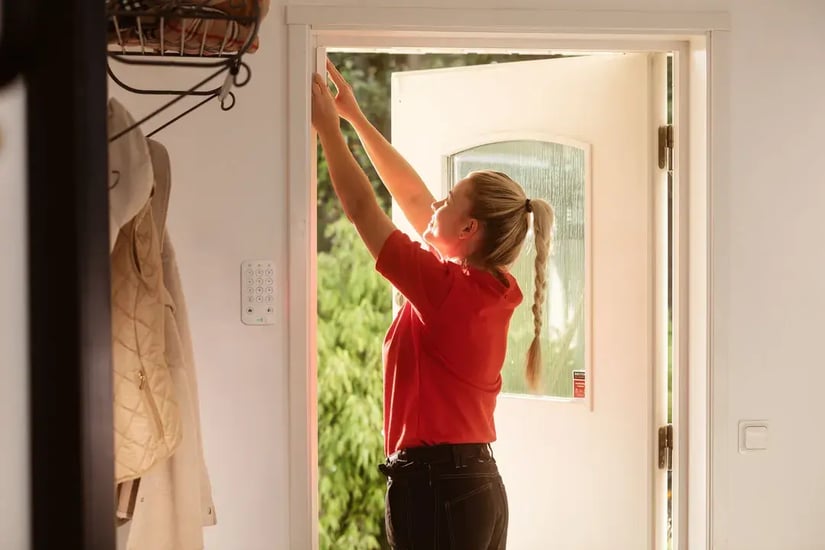
A door alarm sensor is a small device that detects when a door is opened or tampered with. These sensors usually consist of two parts: one mounted on the door and the other on the door frame. When the door is closed, the two components align. If the door opens or the connection breaks, the sensor triggers an alert.
Most modern door sensors use a combination of contact and shock detection. For example, PhoneWatch's Contact and Shock Detector not only senses when a door or window is opened but also detects vibrations that may indicate an attempted break-in before the intruder gets inside. The main types of door alarm sensor are magnetic contact sensors, which detect a door opening, and shock or vibration sensors, which detect force against the door or frame.
How Do Door Alarm Sensors Work?
Door alarm sensors typically operate using magnetic contact technology. When the magnet moves away from the sensor (i.e., the door opens), it sends a signal to your security system, which can then:
- Trigger a loud alarm
- Send a mobile notification to your phone
- Alert a professional monitoring centre
More advanced systems, like the ones offered by PhoneWatch, include shock detection which means the sensor can detect force or impact, offering another layer of protection beyond basic contact sensors.
Why You Should Install a Door Alarm Sensor
1. Deter Intruders Before Entry
Burglars often test entry points before committing to a break-in. Shock-sensitive door sensors can detect these attempts and sound an alarm before entry occurs.
2. Real-Time Alerts
When your sensor is part of a smart system, you'll receive alerts to your phone via the PhoneWatch app if a door is opened while the alarm is armed. With a part-arm (stay) setting, door sensors can stay active while you're at home. Read more in our guide to home security while you're at home.
3. Family Safety
Sensors aren't just for security, they're also great for households with children or elderly residents. Get notified if someone exits the home unexpectedly.
4. Seamless Integration
Door alarm sensors integrate easily with your broader home security system, including motion detectors, cameras, and smart alarms.
Features to Look for in a Door Alarm Sensor
When choosing a sensor, consider the following features:
- Shock Detection: Protects against forced entry attempts.
- Tamper Protection: Alerts you if the device is removed or damaged.
- Wireless Installation: Quick to install without complex wiring.
- Smart Integration: Works with your alarm system and mobile app.
PhoneWatch's Contact and Shock Detector includes all of these features, ensuring both reliability and ease of use.
Where Should You Install Door Alarm Sensors?
Door alarm sensors should be installed on:
- Front and back doors
- Patio or sliding glass doors
- Garage entry points
- Ground floor windows
For full protection, consider pairing sensors with internal motion detectors and outdoor security cameras. For more on protecting windows, see our guide to window alarms and our advice on leaving windows open at night.
Professional Monitoring vs DIY Setup
While DIY sensors exist, they often lack shock detection or integration with monitored alarm systems. With PhoneWatch, your sensor is connected to our 24/7 Alarm Receiving Centre, which responds to alarm signals in an average of 15 seconds.
A professionally installed alarm system offers:
- Reliable performance
- Expert setup
- Remote support
- Insurance benefits in some cases
If you're comparing providers, our guide to the best home alarm systems in Ireland explains what to look for.
Ready to Secure Your Doors?
A well-placed door alarm sensor can be the difference between peace of mind and vulnerability. Whether you're looking to deter intruders, protect your family, or simply keep better track of who's coming and going, sensors offer a smart, simple solution.
PhoneWatch's Contact and Shock Detector provides reliable, professional-grade protection with seamless integration into your home alarm system. Door alarm sensors come as part of our comprehensive home alarm package, ensuring all components work together for optimal security.
Frequently asked questions
How does a door alarm sensor work?
A door alarm sensor has two parts: one fitted to the door and one to the frame. When the door is closed they line up, and when the door opens the connection breaks and the sensor sends a signal to the alarm system. Sensors with shock detection can also pick up the vibration of someone trying to force the door before it opens.
What are the different types of door alarm sensors?
The most common type is the magnetic contact sensor, which detects a door opening. Shock or vibration sensors detect force against the door or frame, and many modern sensors, including PhoneWatch's Contact and Shock Detector, combine both. Motion detectors inside the home add a further layer if someone gets past the door.
Where should door alarm sensors be installed?
Door alarm sensors are usually fitted to front and back doors, patio and sliding doors, and any door leading in from a garage. The same contact sensors are commonly fitted to ground-floor windows and any other window that can be reached from outside.
Can door sensors stay on while I am at home?
Yes. With a part-arm (stay) setting, door and window sensors stay active while motion detection inside the home is adjusted, so you can move around freely while the doors are still protected.
Are door alarm sensors useful for elderly relatives?
Yes. As well as detecting intruders, door sensors connected to an app can alert family members if a door is opened unexpectedly, which can offer reassurance for households with older relatives or young children.
Does PhoneWatch include door and window sensors?
Yes. PhoneWatch door and window contact sensors come as part of our home alarm packages, installed by our team and connected to our 24/7 Alarm Receiving Centre, which responds to alarm signals in an average of 15 seconds.