

Published: November 12, 2023
by
Marguerite Cotter
Updated: November 2026
The clocks have now gone back, bringing longer and darker evenings. At this time of year, house absence can become much more obvious to opportunistic burglars.
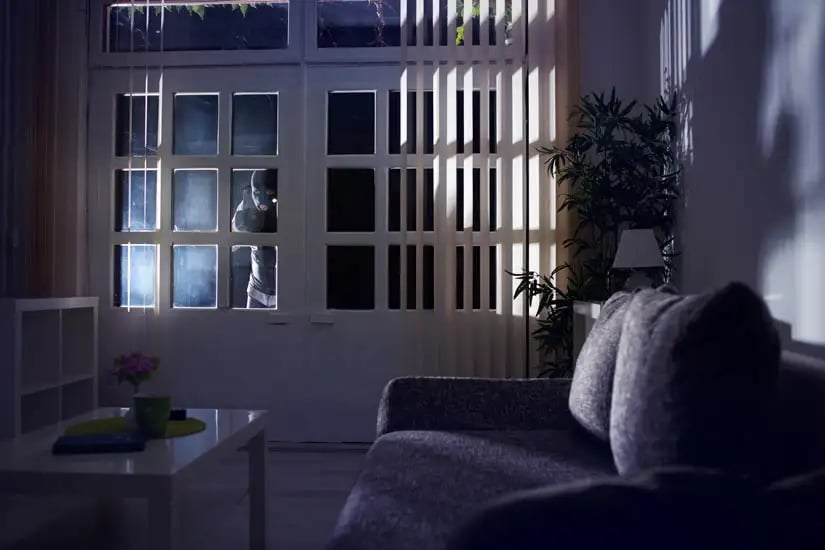
Burglars normally look for signs that a house is unoccupied before attempting a break-in. Night-time can make it easy to see if somebody is at home or not with the absence of light in homes betraying us.
Marguerite Cotter, Marketing Director at PhoneWatch, said "Burglary is typically at its highest during winter months with over 58% of people feeling less safe in their home during winter according to our customer research at PhoneWatch. Burglars are adept at observing signs of a vacant home which becomes much more obvious during darker nights. We are urging homeowners to be aware of the ways burglars can tell if a home is empty. This could be something as simple as inadvertently broadcasting your home's absence on social media."
With this in mind, PhoneWatch, Ireland's leading home security company, has prepared advice for homeowners on how to protect their homes and not advertise their absence. Here are some ways burglars can tell if nobody is at home:
Key Takeaways: How Do Burglars Know You Aren't Home?
- Burglars look for everyday signs that a home is empty: dark windows after sunset, post and deliveries piling up, unanswered knocks and a predictable daily routine.
- Social media is one of the easiest giveaways. Holiday posts and live locations tell followers exactly when your home is empty.
- Gardaí advise that the majority of burglaries take place in unoccupied homes and that most burglars are opportunists who choose the easiest target (An Garda Síochána).
- Burglaries in Ireland rise by around 25% over the winter, and more than 40% of winter break-ins happen between 5pm and 11pm (An Garda Síochána, 2026).
- Timers or smart plugs on lights, a trusted neighbour and a visible, professionally monitored alarm all make your home a harder target.
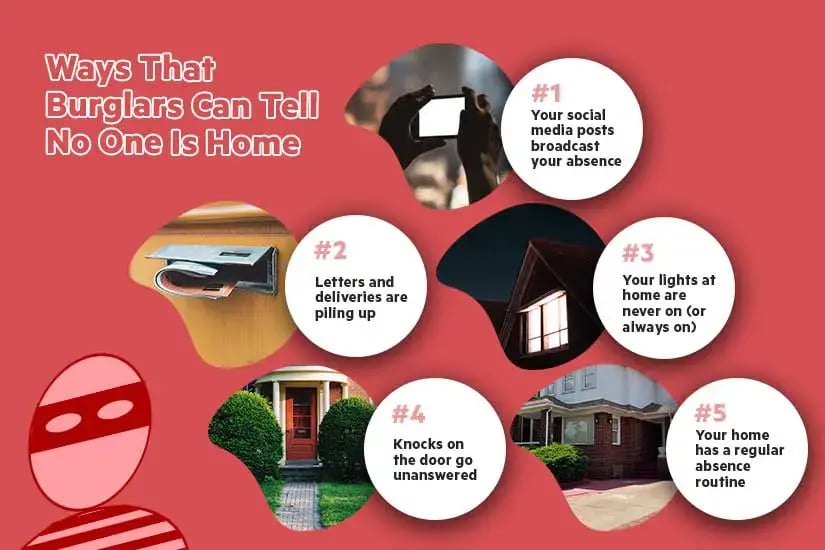
1. Your social media posts broadcast your absence
Break-ins can often occur from those familiar with a person and they may even be your friends on social media. Maintaining good online privacy practices can help prevent the targeting of your home. As an example, if you post about being live at a concert in Dublin and you live in Cork, then it would be obvious to your social media followers (especially if your profile is public) that your home may be vacant. Similarly, if you're visiting your family for Christmas, then don't mention your plans on social media. Try to hold off social media posts until after events if you must post at all.
Make every reasonable effort not to advertise on social media when you are absent from your home. Similarly, encourage your kids to be private regarding what they post online and especially avoid having your live online location visible on social media.
2. Letters and deliveries are piling up
Burglars are always on the watch for signals that you might not be home, especially when they are scoping an area. There can be obvious signs to them that a house may be unoccupied for a period. One of these 'tells' could be a full letterbox if you're away for a long period. A build-up of deliveries at the door may also suggest somebody is not home right now. If your bin is not out or remains out for a few days, it may also indicate a home is not being tended to. Burglaries can happen in seconds so it's important that even temporary absence is not visible publicly.
If you're going away for an extended period, try and pause your mail or get deliveries ordered to your office. Another option is asking a neighbour to collect any arrivals and providing them with a letterbox key. Store your bin out of sight so its placement does not attract attention.
3. After dark, your lights at home are never on (or are always on)
The longer nights make it easier for burglars to determine if somebody is at home. If a house appears dark, then a burglar might determine the home is unoccupied. Garda crime prevention advice lists no lights on at night, or only 'dead' lights such as a porch or hall light, among the things burglars look for. Conversely, unusual lighting patterns within a home such as a backlight always on throughout the night could signal somebody is trying to make the home look occupied.
Smart plugs can be a great option to use with electrical lighting to simulate the impression that somebody is at home. For example, with the PhoneWatch smart plug you can turn off/on electrical appliances from the PhoneWatch app while also monitoring your home's security from within the app.
4. Knocks on the door go unanswered or your home has unusual markings
Burglars' usual practice is to knock on a door to see if somebody answers before attempting a break-in. They seek to confirm their suspicions that nobody is home, which they may have observed from monitoring the home. If nobody answers, they may begin to move to the back of the home to try to break in out of the neighbours' sight.
Burglars may also take more extreme measures like placing markers at your home to see if they are moved during certain times. This could be as simple as placing a piece of Sellotape on your keyhole to observe if it is moved and when. There have also been reports in Ireland of chalk marks and rags tied to gates, and Gardaí have looked into some of these as possible burglary markings, while noting that some may be innocent. If you find an unusual mark or object at your home, photograph it and report it to your local Garda station.
To protect against instances like this, a Doorbell Camera could be a good investment. PhoneWatch's Doorbell Camera is triggered by motion and starts recording once somebody is near the door. When a person presses the doorbell, you can see who is there and speak with them via the PhoneWatch app. And the great thing is, that they will not even know whether you are inside the home or not. Learn more about how a doorbell camera helps you monitor front door activity, especially during busy periods like Halloween.
5. Your home has a regular absence routine that burglars notice
The most obvious signs that a home is unoccupied tend to trend around a home having a particular absence routine which burglars are familiar with from their own prior experience. These trends could be common with other homes or particular to your own home if it is being monitored by potential burglars. It could be as basic as a car always parked in the driveway in the morning but never during the day until after 6pm. This would suggest homeowners are at work during these hours. Closing the gates of your home only when you leave may similarly be a signal when you are away from home. If your blinds are always down on all your windows during the day, while it can shield any valuables from view it may also make your home stick out as unoccupied. Sudden changes to a routine can also communicate absence such as locks suddenly appearing on a gate which was usually unlocked.
We all are creatures of routine but try and become more aware of regular practices or habits you have that might show to others when you're not at home. Try and keep burglars guessing as much as possible regarding your home's routine.
With the evenings drawing in, it's important to think about how to make your home look occupied while still being secure. Many of the tips in our post on home security tips for Halloween apply right through the winter.
Remember, that while these strategies can help lower your chances of burglars noticing your home is unoccupied, it will not prevent burglary. It is essential to maintain effective home security measures to protect your home and assets adequately and to consider a burglar alarm for extra protection.
Marguerite Cotter further added "We would suggest that as well as understanding what attracts burglars' attention, homeowners consider getting a monitored house alarm as an additional measure to protect their home from burglary. Our research indicates that homes with a PhoneWatch monitored alarm system are 4* times less likely to be burgled compared to having no alarm".
*Based on the total PhoneWatch customer base divided by total PhoneWatch customers who have experienced a burglary (data from the PhoneWatch Alarm Receiving Centre, Q1 2025). This data is then compared to the national Irish burglary rate i.e., total Irish households divided by total recorded burglaries, which is data from the CSO (Q1 2025). See the full calculation.
Frequently asked questions
Do burglars knock before breaking into a house?
Sometimes, yes. Knocking or ringing the doorbell is a common way for a burglar to check whether anyone is home. If nobody answers, they may move to the back of the house, out of sight of neighbours. A video doorbell camera lets you see and speak to callers from your phone, so they can't tell whether you're inside.
What time of day do most burglaries happen in Ireland?
Burglaries in Ireland rise by around 25% over the winter, and more than 40% of winter break-ins happen between 5pm and 11pm, according to An Garda Síochána (2026). Dark evenings make it easy to spot a house with no lights on, which is why the weeks after the clocks go back are a higher-risk period.
How can you tell if burglars are watching your house?
Look for a pattern rather than a single event: the same unfamiliar car or person on your road at different times, callers who knock and leave without a clear reason, or items placed at your property, such as tape over a keyhole. Note the details and report them to your local Garda station, or call 999 or 112 if a crime is happening.
Do burglars mark houses in Ireland?
There have been reports in Ireland of chalk marks, tape over keyholes and rags tied to gates, and Gardaí have looked into some of them as possible burglary markings. Some turn out to be innocent. If you find an unusual mark or object at your home, photograph it and report it to your local Garda station.
How can I make my house look occupied when I am away?
Put lamps in two or three rooms on timers or smart plugs set to realistic times, pause post and deliveries, ask a neighbour to move your bins or park in your driveway, and keep travel plans off social media until you're back. Set your alarm every time you leave, including short trips.